Two Outlet Water Timer: Plan Two Garden Watering Lines
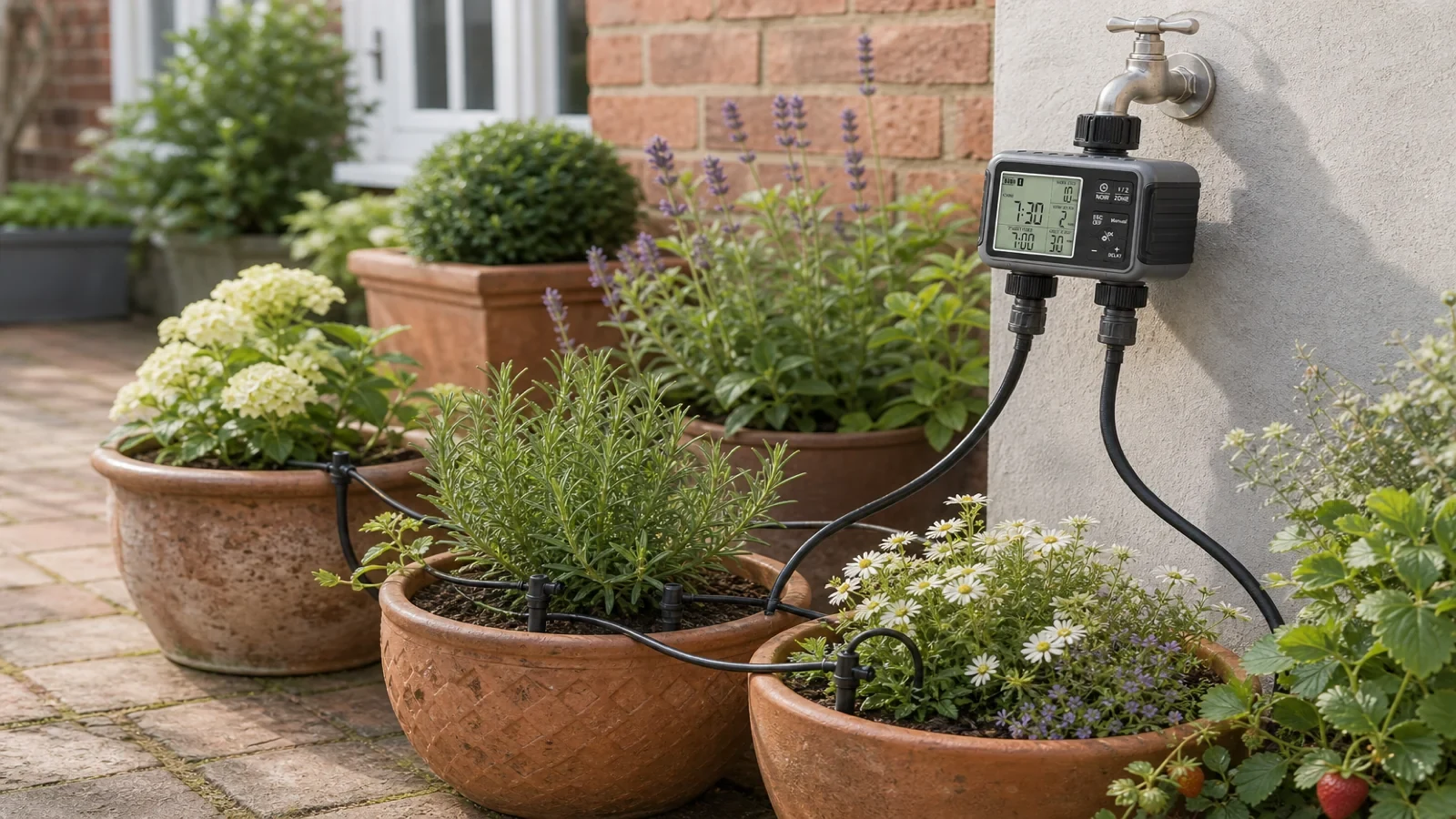
Practical answer: a two outlet water timer turns one outside tap into two scheduled watering lines. Plan it by assigning one clear job to each outlet, testing those lines separately and giving them different routines only where the plants, containers or delivery methods genuinely need it.
For a time-poor household, the best plan is the one that remains understandable on a busy morning. Label both lines, write down their jobs and start with modest schedules you can observe. Automation should remove repeated hose swapping; it should not hide leaks or replace checking the garden.
Map the garden before programming the timer
Walk from the tap to the furthest point of each proposed line. Note hose length, changes in level, sunny areas, small containers and fittings already in place. Grouping solely by distance can create a poor match; group by watering method and likely need as well.
| Planning question | Outlet 1 | Outlet 2 |
|---|---|---|
| Area served | Lawn or front border | Pots, greenhouse or raised bed |
| Delivery method | Sprinkler or porous hose | Drip line or hose |
| When it dries fastest | Record your observation | Record your observation |
| Separate start needed? | Yes / no | Yes / no |
| First test result | Even / weak / leaking | Even / weak / leaking |
This worksheet is deliberately simple. It gives another household member enough context to pause or test the correct line without guessing what “Zone 2” means.
Useful two-line pairings
Lawn and containers
These are different jobs. Containers can dry quickly, while an established lawn may not need routine watering and can often recover from temporary browning. Separate lines prevent a daily pot routine from automatically sending the same amount to turf.
Greenhouse and outdoor border
A greenhouse receives no rainfall, but an outdoor border does. Keeping them separate makes it possible to pause the outdoor line after rain while retaining a carefully checked indoor routine.
Two drip circuits
Splitting a long or awkward layout can make inspection easier. Confirm that pressure control and the number of emitters remain within the component maker's guidance. Check the emitters at the end of each line, not only those nearest the tap.
If you want the underlying valve and flow explanation, see how independent dual-zone outlets work.
Install in an order that exposes problems early
- Turn off the tap and inspect its thread, the inlet washer and the filter.
- Attach the timer squarely by hand without forcing the connection.
- Connect and label Outlet 1, then open the tap slowly and test that line.
- Repeat with Outlet 2.
- Test both together only if the timer supports it and you plan to use overlaps.
- Check joints again after the hoses have settled into position.
- Programme short supervised cycles before setting an unattended routine.
Keep hose weight off the timer. A loop of supported hose below the unit can reduce sideways pull from a long line, but do not create a kink that restricts flow.
Build a water-wise routine for both outlets
The RHS advises early-morning watering as generally best because less water is lost to evaporation and plants can use it during the day. Evening is an alternative, although wet foliage overnight can encourage some pest and disease problems. Aim water at the soil or compost around roots rather than routinely wetting foliage.
Avoid copying one fixed duration from the internet. Delivery rate, weather, soil, pot size and plant stage make that figure unreliable. Instead:
- run a short supervised cycle;
- check whether water reaches the intended root area;
- look for runoff, blocked emitters and dry sections;
- adjust one variable at a time;
- recheck after a marked change in weather.
The RHS also notes that containers, new plants and many food crops can need closer attention, while established plants in suitable ground often need less routine watering. That supports separate planning rather than giving both outlets a matching daily command.
Before a weekend away: a five-minute check
- Watch one complete cycle on each outlet.
- Confirm the display clock, next start and active zone.
- Check the battery indicator and use the specified battery type.
- Clean the inlet filter if the instructions permit.
- Inspect every washer and connection while pressurised.
- Make sure hoses cannot tug on the timer or move across a path.
- Review the forecast and pause outdoor watering if the soil is already wet.
- Check your water supplier for any restrictions that apply at the property.
For detailed fault diagnosis before you leave, use the two zone timer troubleshooting checklist.
Plan for restrictions and changing weather
Temporary Use Bans are set by water suppliers for defined areas and periods. Do not assume that attaching a timer makes a hose or sprinkler permissible. Current supplier guidance shows that where a fixed drip or trickle system is allowed, conditions can include a timer, a pressure-reducing valve, direct-to-soil delivery and no spray, mist or surface runoff.
Check the exact current page from your own supplier each time restrictions change. If the planned setup does not meet the wording, use an allowed alternative such as a watering can, stored rainwater or another method identified by that supplier.
Two-outlet planning questions
What can I connect to a two outlet water timer?
Typical lines include a hose sprinkler, drip line, porous hose or standard hose connection. Each attachment must suit the timer, water pressure and intended use.
Should both outlets use the same schedule?
Only if both areas genuinely need the same treatment. The reason to choose two controlled outlets is normally to give unlike areas different run times or frequencies.
What should I do before leaving the timer unattended?
Watch complete test cycles, inspect every joint, confirm battery condition, clear filters, secure hoses and check the forecast plus any current water restrictions.
Is early morning always the only acceptable watering time?
The RHS identifies early morning as generally best because evaporation is lower and plants can use water through the day. Evening can be acceptable, but plant and weather conditions still matter.
Ready to automate your watering with WaterTimer UK?
Upgrade Your Tap — £56.99