Two Zone Water Timer: Setup and Leak Troubleshooting
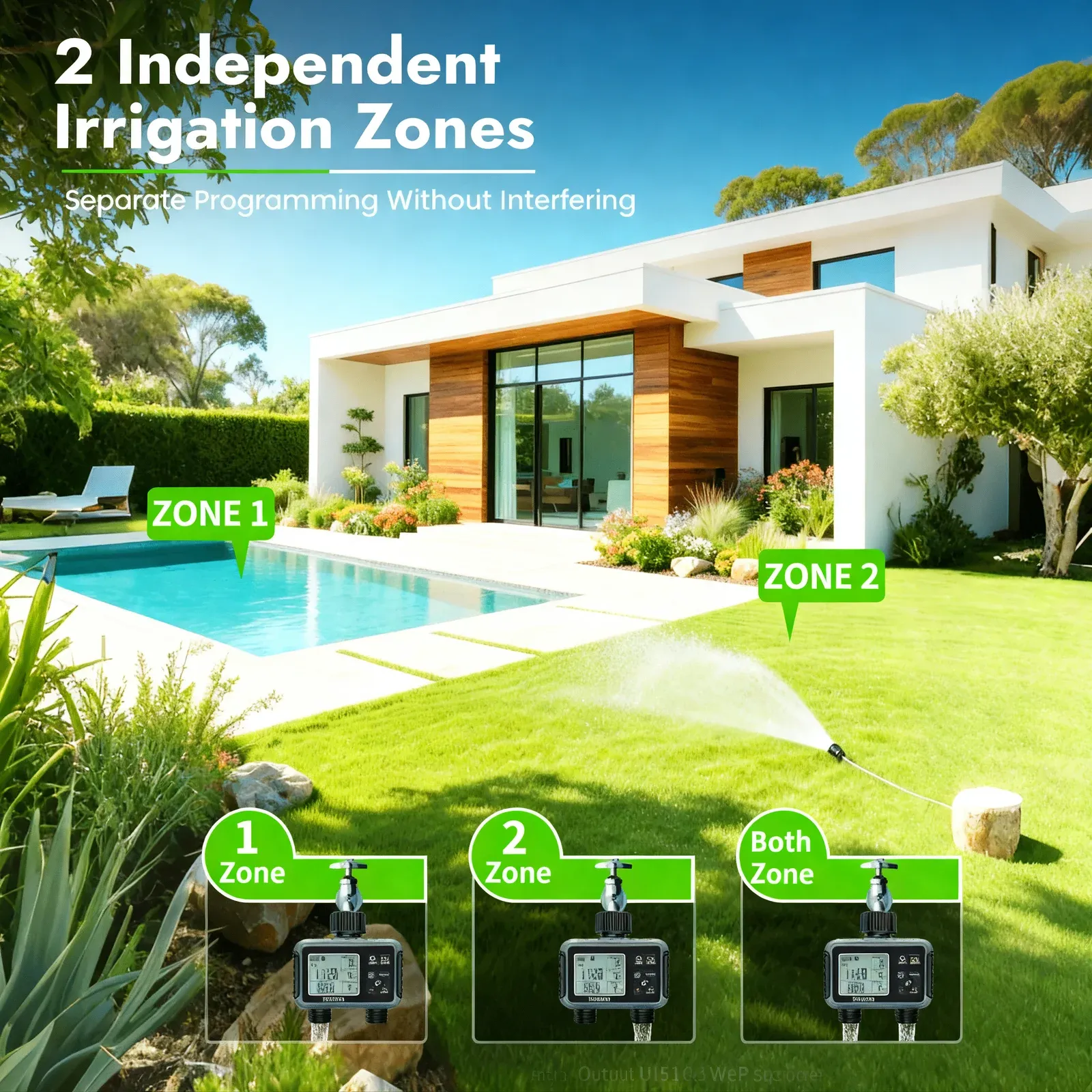
Start here: when a two zone water timer leaks, loses flow or misses a cycle, turn off the tap and diagnose one section at a time. Check the inlet washer and thread first, then test each outlet alone, review the clock and programme, and only then investigate downstream hoses or emitters.
This order is useful because several faults look alike. A weak sprinkler can be caused by a blocked inlet, a kinked hose or two outlets sharing flow. Changing several settings and fittings at once makes the real cause harder to identify.
Safe setup before troubleshooting
- Turn the tap off before loosening any pressurised joint.
- Keep the battery compartment and controls as dry as the instructions require.
- Use hand pressure on threaded plastic or swivel fittings unless the maker explicitly permits a tool.
- Support heavy hoses so they do not pull sideways on the timer or wall tap.
- Use only within the stated pressure, temperature and water-quality limits.
After reassembly, open the tap slowly while watching the joint. A dry paper towel held around a connection can reveal a slow seep, but keep paper away from the battery compartment and dispose of it after the test.
Leak at the tap or outlet
- Close the tap and release downstream pressure.
- Unscrew the connection and inspect the sealing washer or O-ring.
- Remove grit from the seating face and check that the filter sits flat.
- Compare the tap thread with the required connector or adaptor.
- Refit squarely by hand. If it tightens at an angle or immediately binds, stop rather than forcing it.
- Reconnect the hose without leaving it under sideways tension.
- Open the supply slowly and observe.
Thread tape is not a substitute for the correct washer on a connection designed to seal against a flat gasket. Follow the connection method in the timer or adaptor instructions. A damaged tap thread, cracked housing or persistent leak needs replacement or qualified attention rather than repeated tightening.
One zone has weak or uneven flow
Use a comparison test before changing the programme.
- Run Zone 1 alone, then Zone 2 alone.
- Swap only the downstream hoses at the outlets if the fittings allow it safely.
- If the fault follows the hose, inspect that hose, connector and emitters.
- If the fault stays at one timer outlet, check that outlet and the maker's valve guidance.
- Clean the inlet filter as instructed and retest.
If both zones work alone but weaken together, the combined demand is greater than the useful flow available through the tap and fittings. Stagger the programmes so only one valve opens at a time. For more context, see the dual-zone flow comparison.
A scheduled cycle did not run
| Symptom | Check | Next action |
|---|---|---|
| Display blank or faint | Battery type, orientation, contacts and condition | Fit specified fresh batteries and reset only as instructed |
| Display on, no scheduled start | Clock, start time, active day/frequency and zone selection | Correct one setting and use a near-term supervised test |
| Rain-delay symbol shown | Remaining pause period | Cancel only if watering is appropriate and the instructions allow |
| Manual mode works, schedule does not | Programme enabled and no off mode | Review the saved programme step by step |
| Neither manual nor scheduled mode opens | Battery, supply tap, filter and valve error | Follow maker support; do not dismantle a sealed valve body |
Remember that a timer can open correctly while no useful water reaches the plants. Watch the furthest dripper or sprinkler, not just the display icon.
The programme runs, but the soil is too wet or dry
First verify that the programme shown on the display is the one being used by that zone. Then examine delivery. A disconnected emitter, split hose or runoff can waste water without wetting the intended roots; a blocked emitter can leave one plant dry while the rest of the line appears normal.
- Reduce or pause watering after rain when the soil remains moist.
- Move water delivery towards the root area instead of spraying foliage.
- For soil-grown plants, favour a useful soak when needed over repeated shallow splashes.
- Check pots more often because small containers can change quickly in sun and wind.
- Change one programme variable at a time and inspect the result.
The RHS watering guide explains why weather, soil and establishment stage matter more than a universal calendar.
Rain delay and winter care
A manual rain delay is useful only when somebody applies it. Check the forecast and ground before pausing, and confirm when the normal programme will resume. It should not be described as automatic rainfall detection unless the installed system has a verified sensor.
Before freezing conditions:
- Turn off the supply and disconnect both downstream lines.
- Remove the timer from the tap.
- Drain retained water using the method in the instructions.
- Remove batteries if the maker advises it, and inspect contacts for moisture or corrosion.
- Store the timer upright, dry and frost-free.
Metal inlet and outlet parts may resist thread wear, but water can still freeze in valves, seals and the housing. Seasonal removal is safer than relying on the connector material.
Troubleshooting questions
Why does my timer leak at the tap?
The common checks are a missing, dirty or flattened washer; a filter or washer seated unevenly; a crossed thread; an adaptor mismatch; or sideways load from the hoses. Turn off the tap before dismantling.
Why is one zone weaker than the other?
Compare each zone alone. A kink, blocked filter or emitter, long narrow hose, restrictive connector or different outlet demand can reduce flow. If both weaken together, the incoming supply may be the limiting factor.
Why did a scheduled cycle not start?
Check battery condition, clock, active programme, zone selection, rain delay and any off mode. Then run a short manual test. If the valve still does not operate, follow the maker's fault guidance.
How should I store the timer in winter?
Turn off the water, disconnect hoses and the timer, drain it as the instructions direct, remove batteries when advised and store the unit dry in a frost-free place.
Ready to automate your watering with WaterTimer UK?
Upgrade Your Tap — £56.99