2 Zone Water Timer: A Practical UK Buyer's Guide
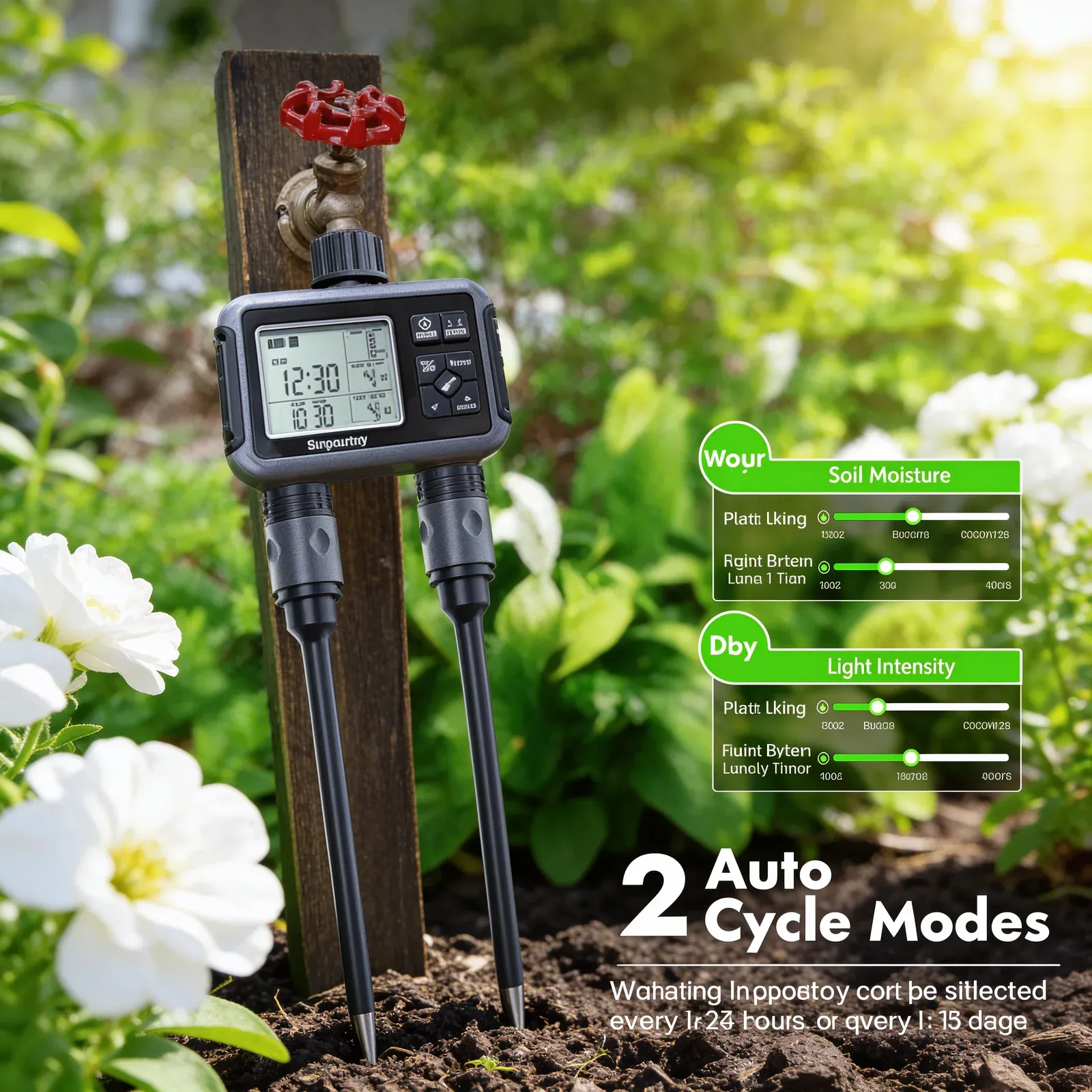
Short answer: a 2 zone water timer connects to one outdoor tap and controls two watering lines independently. It is a practical choice when two parts of a garden need different start times or run lengths, provided you check the tap thread, available water flow and programme controls before buying.
If this is your first timer, start with the two jobs you actually want to automate. A lawn sprinkler and a line of pots are a typical pair, but they should not usually share one identical schedule. The value of two zones is the ability to give each line a separate routine without swapping hoses at the tap.
Is a two-zone timer the right first purchase?
Choose two zones when you have one outdoor tap and two areas with clearly different needs. A single-outlet timer is simpler if every connected plant can share one line and one programme. More outlets are not automatically better: every extra connection adds another seal to inspect, and two running lines must share the flow available at the tap.
- Good fit: lawn plus pots, greenhouse plus border, or two drip lines in different exposures.
- Probably unnecessary: one small patio line that always runs as a single circuit.
- Check first: whether both outlets have genuinely independent start, duration and frequency settings.
For a closer look at valves, overlapping programmes and flow, read how a dual zone water timer works.
Five checks to make before you buy
- Identify the tap thread. Hozelock says 3/4-inch BSP is the most common UK outdoor-tap thread, while some older taps use 1/2-inch BSP. BSP is a nominal size, so the number is not the same as a simple outside-diameter ruler reading.
- Look at the space below the tap. A dual-outlet body is wider and heavier than a plain connector. Make sure it can hang without striking a wall, water butt or tap box.
- Confirm independent controls. Product wording such as “two outlets” does not by itself prove that each outlet has a separate programme.
- Check the operating limits. Use only within the maker's stated pressure and temperature range. If those figures are absent, ask before relying on the timer.
- Plan the downstream fittings. Note whether you need threaded adaptors, quick connectors, a pressure reducer, a filter or a non-return device for the intended system.
Hozelock's tap-measuring guide is a useful visual cross-check. Photographing your tap and existing connector before ordering also makes adaptor questions easier to answer.
Which features matter most?
Independent programmes
The useful distinction is not the number of outlets but what you can set for each one. Check start time, run length, watering frequency and whether the two valves may open together. A manual override should let you test a line or fill a watering can without deleting the saved routine.
Clear controls and battery warning
A display that can be read at tap height and controls that make the active zone obvious reduce setup mistakes. Check which batteries are required, whether they are included and what the timer does when power becomes low. Do not assume a closed or open fail position without documentation.
Rain delay, not a weather forecast
On a non-connected timer, rain delay normally pauses the programme for a chosen period; it does not measure rain. You still need to check the forecast, inspect the soil and decide whether to pause.
Serviceable seals and filter
Brass inlet and outlet connections can resist thread wear, but a watertight joint still depends on a clean washer, correct alignment and hand-tight assembly. A removable inlet filter is helpful where grit could reach the valves.
A first-time setup checklist
- Fit fresh batteries with the tap turned off and set the correct clock.
- Check the inlet washer and filter are present, clean and seated flat.
- Offer the timer squarely to the tap and tighten by hand; stop if the thread feels crossed.
- Connect each hose line and label it Zone 1 or Zone 2 at both ends.
- Open the tap slowly and inspect every joint before programming.
- Set one short test cycle for each zone separately, then test both together only if the instructions allow simultaneous operation.
- Watch the first complete scheduled cycle rather than leaving immediately after setup.
Start conservatively and adjust after checking the soil, not just the surface. The RHS watering guidance advises responding to plant, soil and weather conditions instead of following a rigid universal routine.
Honest limitations to allow for
- Shared flow: two open outlets split the water available from one tap. A sprinkler may lose reach when another line opens.
- No automatic judgement: a basic timer cannot see dry compost, blocked drippers or an unexpected shower.
- Connection stress: avoid letting a heavy or taut hose pull sideways on the timer and wall tap.
- Cold weather: brass connectors do not protect the full timer from water freezing inside. Disconnect, drain, remove batteries if the instructions say so, and store the unit dry and frost-free.
- Restrictions: a timer does not override a Temporary Use Ban.
During restrictions, check your own supplier's current wording. Some suppliers permit qualifying fixed drip or trickle arrangements only when they include a timer and pressure-reducing valve, deliver water directly to soil and avoid spray or runoff. A sprinkler attached to a timer is not the same arrangement.
First-buyer questions
What does a 2 zone water timer do?
It connects to one outdoor tap and controls two outlet valves. Each outlet can run a different watering line on its own programme, subject to the controls offered by the chosen model.
Will a 2 zone timer fit every UK outside tap?
No universal fit should be assumed. A 3/4-inch BSP outlet is common in the UK, but older or unusual taps may need a different adaptor. Check the thread and the space around the tap first.
Does rain delay detect rain automatically?
Not necessarily. On a timer without a rain sensor, rain delay is a manual pause that you set after checking the forecast. The saved programme resumes when the selected delay ends.
Can I use a timer during a hosepipe ban?
A timer alone does not provide permission. Check the current rules published by your own water supplier. Some suppliers permit qualifying fixed drip or trickle systems only when further conditions are met.
Ready to automate your watering with WaterTimer UK?
Upgrade Your Tap — £56.99