How to Irrigate a New UK Garden: A Beginner Checklist
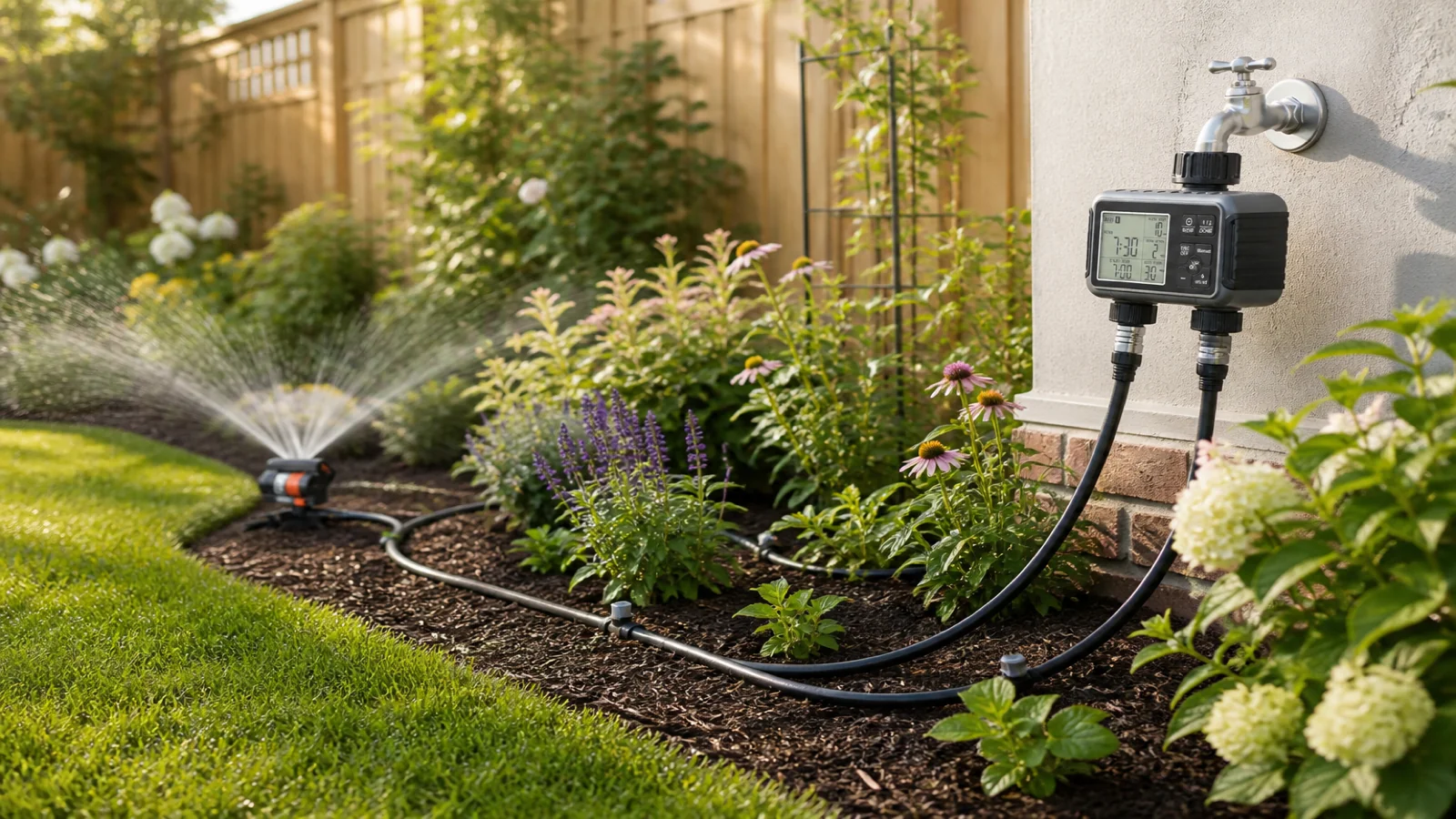
Start with zones, delivery method, and a schedule—not gadgets. Map lawn, beds, and containers, choose hose, sprinkler, or drip for each area, then automate with a dual-zone digital water timer such as the SGW07M on a UK outdoor tap so watering happens even when you forget.
Why irrigation planning comes before planting
A new garden often stalls because watering feels mysterious. Seeds dry out, turf establishes unevenly, and containers bake on warm afternoons. You do not need an irrigation engineer. You need a simple map of what needs water, how you will deliver it, and when it should run. Once those three answers are clear, a tap timer turns the plan into a habit you do not have to remember every evening.
In the UK, outdoor taps are commonly BSP 3/4". A dual-zone digital water timer such as the SGW07M is designed for that connection and gives you two independent outlets. That matters on day one: lawn and borders rarely want the same run time.
Beginner checklist: from bare soil to a working system
- Walk the plot and list water needs. Separate lawn, flower beds, raised beds, greenhouse benches, and containers. Note sun, shade, and wind. Sunny south-facing beds and pots usually need more frequent watering than damp shade.
- Pick a delivery method per area. Sprinklers or oscillating sprinklers suit lawn. Drip line or micro-spray suits beds and raised beds. Greenhouse trays and pots often work best with drip stakes. Do not force one method on every plant.
- Group by similar thirst. Put thirsty vegetables and soft fruit on one logical group; established shrubs that prefer drier soil on another. Two groups is enough for most small gardens and matches a two-outlet timer.
- Check your outdoor tap. Confirm BSP 3/4" threading and that the tap sits where a timer can hang without kinking the hose. Note water pressure: the SGW07M is specified for 0.05–0.8 MPa and operating temperatures of 4.5–45°C.
- Fit hose, fittings, and watering kit first. Lay drip line or place sprinklers, flush debris from new hose, and check for leaks before you add automation.
- Add the timer last. Fit a dual-zone digital water timer such as the SGW07M to the tap, connect zone one and zone two to your two groups, insert 2×AA alkaline batteries (not included; rechargeable batteries are not recommended), and set duration and frequency on the LCD.
- Test manually, then schedule. Use the manual function to confirm each outlet opens and closes. Then set duration between 1 and 360 minutes and frequency from 1–23 hours or 1–15 days, depending on soil and season.
- Review after the first week. Dig a finger into the soil. Adjust duration or frequency rather than adding mystery accessories. Enable rain delay (1–15 days) when a wet spell arrives.
What a dual-zone timer actually does for beginners
The SGW07M does not measure litres or display flow. It opens and closes two independent outlets on a schedule you choose. Each zone can run its own duration and frequency. That is enough to keep a new lawn on short, frequent cycles while beds get a longer, less frequent soak—without standing at the tap with a phone timer.
Features that help new gardeners stay safe and consistent include a child lock, an LCD for on-device programming, IPX5 water resistance for outdoor use, and a plastic body. There is no app: you set everything at the timer. That keeps setup local and simple when you are still learning the garden.
Suggested starter schedules (adjust to your soil)
These are starting points, not prescriptions. Clay holds water longer than sandy soil; windy sites dry faster.
- New turf or seed: shorter durations more often—e.g. 10–20 minutes once or twice daily in dry weather, then lengthen as roots deepen.
- Flower beds and raised beds: longer, less frequent runs—e.g. 30–60 minutes every two or three days, checked against soil moisture.
- Greenhouse and containers: often need more frequent attention than ground beds; use drip where possible and watch for drying on hot days.
Use rain delay for 1–15 days when showers arrive so you do not water on top of rain. When you return, clear the delay and resume the schedule.
Boundaries and what not to expect
- The timer sits on the tap; it does not replace drip line, sprinklers, or hose fittings.
- It does not offer adjustable flow control, a flow meter, or litre readouts on the display.
- It is not a filter and does not claim anti-clog protection—flush lines and keep emitters clear yourself.
- Use 2×AA alkaline batteries only as recommended; rechargeable cells are not advised.
- Operate within 0.05–0.8 MPa and 4.5–45°C. Extreme frost or heat outside that range is outside the product’s stated window.
- Suitable for lawns, flower beds, raised beds, greenhouses, sprinkler systems, and drip irrigation—not for tasks outside ordinary garden watering.
FAQ
Do I need an app?
No. The SGW07M has no app. Programme duration, frequency, rain delay, manual run, and child lock on the LCD at the tap.
Can one timer water lawn and beds?
Yes, if you use the two independent outlets for two groups—e.g. lawn on outlet one, beds or drip on outlet two—with different durations and frequencies.
How long should I water as a beginner?
Start conservatively within 1–360 minutes, check soil after a few days, then change duration or frequency. Rain delay of 1–15 days helps during wet UK spells.
Explore the SGW07M dual-zone digital water timer and finish your new-garden checklist with schedules you can set once and trust.
Ready to automate your watering with WaterTimer UK?
Upgrade Your Tap — £56.99