Why Does Water Pressure Drop on Long or Thin Garden Hoses?
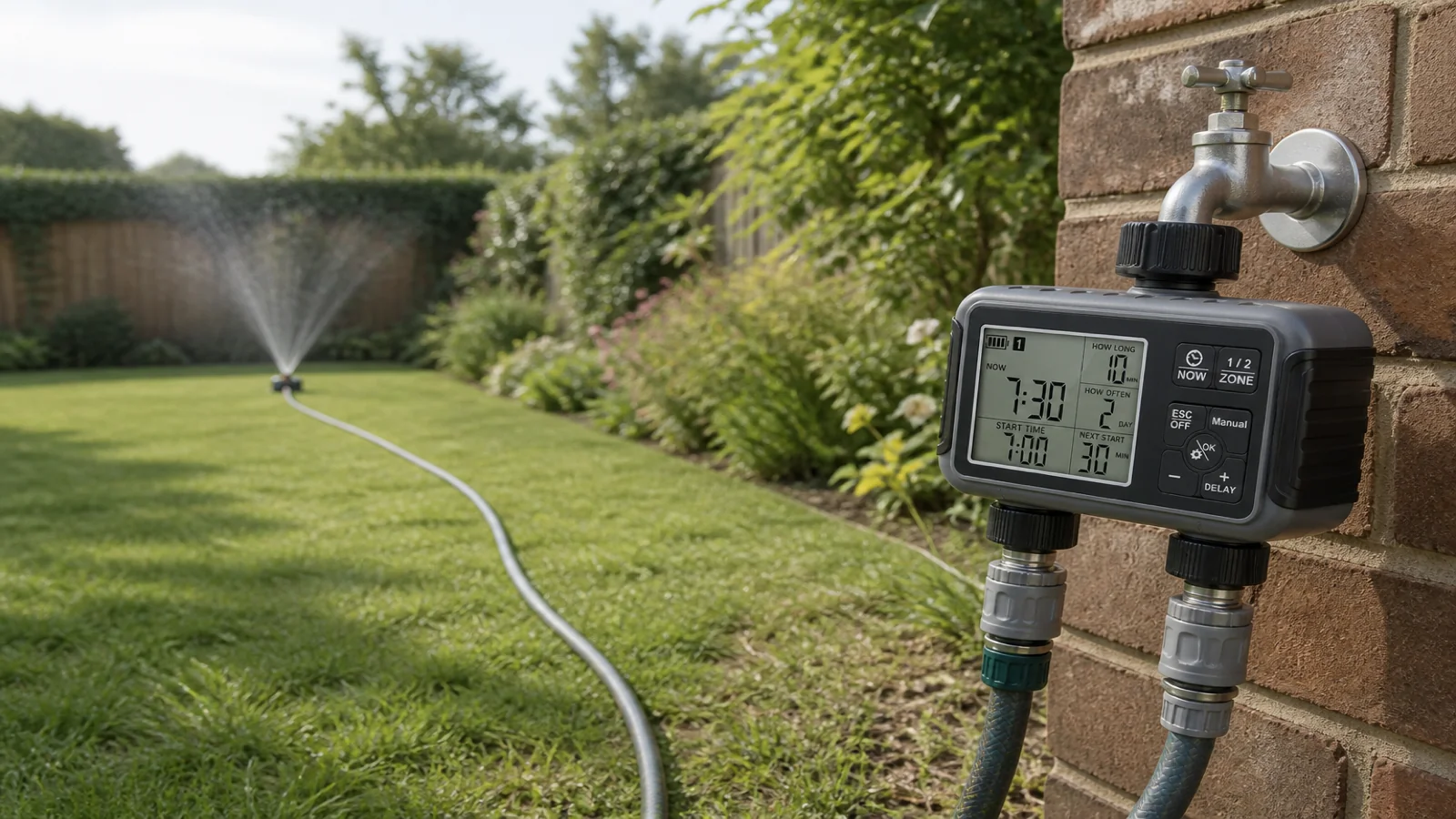
Water pressure falls along a long or thin garden hose because friction and fittings resist flow. The further water travels—and the narrower the bore—the more energy is lost before it reaches the sprinkler or drip line. A dual-zone digital water timer such as the SGW07M does not boost pressure; it only opens and closes valves within a working range of 0.05–0.8 MPa. If pressure at the end of the hose is already low, scheduling alone will not fix a weak spray.
What “pressure drop” means on a UK outdoor tap
At the tap you may feel a strong jet. At the far end of a hose you may see a soft mist or a dripper that barely drips. That difference is pressure drop: loss of available pressure between the source and the watering point. Common causes include hose length, a small internal diameter, kinks, worn washers, multi-way connectors, and running several outlets at once.
UK garden taps often feed a BSP 3/4" thread. That connection itself is not usually the main loss, but every extra adaptor and elbow adds a little resistance. Long runs across a lawn or down a path amplify the effect, especially with a thin “economy” hose.
Length and bore: the two biggest levers
Longer hose means more wall contact and more friction. Thin hose means higher velocity for the same flow, which increases friction further. A short, generous-bore hose to a nearby bed usually keeps more of the tap’s pressure. A thin hose stretched the full length of a garden often does not.
Practical checks before you blame the tap:
- Uncoil the hose fully and remove kinks.
- Compare spray at the tap with spray at the nozzle after the full run.
- Try a shorter spare hose on the same tap to see whether length is the culprit.
- Inspect connectors for crushed or perished washers.
If shortening the run or using a wider hose restores a usable spray, the timer is unlikely to be at fault.
Timers, working pressure, and dual-zone staggering
Many digital timers need a minimum inlet pressure to open reliably and have a maximum they can withstand. For a dual-zone digital water timer such as the SGW07M, the stated working pressure is 0.05–0.8 MPa. Below the lower end, valves may not open cleanly; above the upper end you risk damage. The timer does not raise pressure—it passes what the tap and hose supply.
With two independent zones you can stagger watering instead of running both lines together. That does not increase pressure, but it can reduce simultaneous demand on a long, thin shared supply. Programme each zone for a duration between 1 and 360 minutes, and set frequency for every 1–23 hours or every 1–15 days, so beds take turns rather than competing for the same weak flow.
Rain delay (1–15 days), a manual mode, child lock, and an LCD make day-to-day control straightforward without an app. The body is plastic, rated IPX5 for water jets from any direction in normal outdoor use, and intended for 4.5–45°C. Power is from two AA alkaline batteries (not included); rechargeable cells are not recommended. Use cases include lawns, flower beds, raised beds, greenhouses, sprinklers, and drip irrigation—always within that pressure window.
Sprinklers and drip lines feel pressure loss differently
Oscillating and rotary sprinklers need enough pressure to throw water. On a long thin hose they often shrink their pattern first. Drip irrigation can still wet roots at lower pressure, but emitters may run unevenly: near ones wet well, far ones starve. Raised beds and greenhouse benches on a single long feed show the same pattern—plants closest to the tap fare better unless you redesign the layout.
Helpful layout habits:
- Keep high-demand sprinklers on the shortest practical run.
- Put drip zones on their own outlet when you have two zones.
- Avoid daisy-chaining many thin adaptors at the far end.
- Water one zone at a time if both need strong flow.
Boundaries: what a timer will and will not solve
A timer will not create pressure. It will not widen a hose, remove municipal supply limits, or compensate for a severely kinked line. It will start and stop water on a schedule, lock controls against curious fingers, and let you pause after rain. If your end-of-hose spray is weak with the tap open manually, fix hose length, bore, or layout before expecting better results from automation.
Also respect temperature and pressure ratings. Freezing conditions and pressures outside 0.05–0.8 MPa sit outside normal use for this class of plastic dual-outlet timer. Do not invent “boost” claims for any battery timer; if you need higher pressure at the plant, shorten the hose, use a larger bore, or reduce simultaneous outlets.
FAQ
Can a dual-zone timer increase water pressure?
No. A dual-zone digital water timer such as the SGW07M opens and closes outlets; it does not pump or boost. Staggering zones can ease shared demand but does not raise pressure.
Why is pressure fine at the tap but weak at the sprinkler?
Friction along a long or thin hose, plus fittings and kinks, dissipates pressure before the water reaches the nozzle. Test with a shorter hose to confirm.
What pressure range should I stay within?
For the SGW07M class of timer, stay within 0.05–0.8 MPa at the inlet. Outside that range, performance or durability may suffer.
If you want scheduled dual-outlet control on a standard UK outdoor tap without claiming any pressure boost, see the dual-zone digital water timer (SGW07M) and match your hose run to the working pressure you actually have at the end of the line.
Ready to automate your watering with WaterTimer UK?
Upgrade Your Tap — £56.99